Your life without a computer: what does it look like?
My life would look like a zoo that went rouge without a computer. How would I homeschool, how would I look up everything known to man? How would I keep up with all those endless emails? How would I find solutions to everyday problems and new recipies to cook for dinner? I will I learn random new skills and tricks? While I know screens can overstimulated and too much can be unhealthy, without a computer and internet access my life would look a whole lot dfferent. Simpilar indeed but not as versatile and vast as my current knowledge base and skills.
The search for an captivating and comprehensive curriculum has finally come to an end. Miacademy has it all. 100%, flexible, customizable and tailored to each child’s needs. With Mia you can track your student’s progress and attendance while meeting all state requirements. They will grade all the online assignments as well as sending weekly reports about your students completed work.
I have tried K12, OHDELA, OHVA, brick and mortar, and traditional homeschooling. I have over 8 years of homeschooling experience and Miacademy has by far exceeded every expectation. Once a subscription is secured the parent has instant access to every grade level Mia has to offer. The user-friendly interface and fun activities allow for a smoother school day and provide a structured, fun learning environment. Mia has online activities and learning videos as well as worksheets. Most classes have workbooks available for purchase along with free printable versions. I believe the printable resources add a level of enrichment that is unmatched by the other platforms like Time for Learning and Acellus.
I can not say enough good things about this curriculum. Students can make videos to post online and join other kids in games. They can open their own shop to sell things, take care of virtual pets, build their dream castle and so much more with the community features. Kids are encouraged daily with incentives like prizes and gold coins for their hard work, turning learning into a fun game. My middle schooler seems to enjoy it just as much as my kindergartener.
As any homeschool parent would know, some days can be difficult and exhausting. Gathering appropriate curriculum and preparing for the next school year often takes a considerable amount of time and effort. Mia has made my life a whole lot easier. I am not affiliated with Mia and will not receive any kind of kickbacks for this post. I am simply wanting to brag on Miacademy and share my experiences for any parent that may be out there searching for a great curriculum. Mia is THE BEST option I can find in comparison. I’ve used ABC mouse, Khan’s academy, The Good and the Beautiful, and many other resources, None compared to Miacademy. I have like the platform so much I am considering buying the lifetime option next time to save money. I have watched as other programs have raised their prices extensively over the last few years putting Mia not only in the top running for quality of curriculum but for being the most budget friendly as well. They even have financing options for those who need it.
The customer service representatives are the kindest and most sportive team I have ever come into contact with. Any level of subscription gets you 24 hour access to customer service chat lines where every question is answered promptly and thoroughly. Whether you are just generally lost or have a critical question, every instance someone is always there to help.
Might I add the Miacademy is accredited and has an extremely high success rate. Every student is encouraged to reach mastery in all levels before continuing on to the next lesson. This approach maximizes retention and gives students confidence in their knowledge base. This feature alone is the backbone to why Mia is so great. It allows parents to see their child’s repeated attempts highlighting any area that may be of difficulty. That way parents have a clear understanding of what materials may need a little more attention and allows them to provide additional support when needed.
Once I opened my account it took me no more than 30 minutes to set up accounts for two children and assign their curriculum for the entire year. I could then go through and see what was to be completed each day and plan accordingly. Each lesson has learning videos along with practice questions, quizzes and worksheets. They offer a comprehensive, customizable curriculum that supports all core subjects—Math, Language Arts, Science, and Social Studies—alongside a wide range of engaging electives. They even offer Biblical studies as well for all grade levels.
Miacademy puts you in complete and total control of your children’s education in a convenient and user friendly platform. They take safety very seriously and monitor all chats as well as videos posted. There are Miacademy options called clever dragons and always ice-cream that gives a gender specific guide to the website. Clever dragons is for boys and always ice cream is for girls for those parents who prefer their children to only interact with other children of the same sex. If they so wish, parents can take it even further by not allowing emails, friend requests and other community features. Parents can also make lessons required, essentially blocking all games and community features until the day’s lessons are complete.
To conclude, if you want a curriculum that is amazing, engaging, fun, exciting, thorough, AND easy to use, go check out Miacademy. They have free trial options for those looking to test out the waters. Happy Homeschooling!!
Welcome back to another in-depth Bible study. May you have listening ears and eyes that see. Join me as we dive into Father’s word.
Judges 11:7
7 And Jephthah said unto the elders of Gilead, Did not ye hate me, and expel me out of my father’s house? and why are ye come unto me now when ye are in distress?
8 And the elders of Gilead said unto Jephthah, Therefore we turn again to thee now, that thou mayest go with us, and fight against the children of Ammon, and be our head over all the inhabitants of Gilead.
9 And Jephthah said unto the elders of Gilead, If ye bring me home again to fight against the children of Ammon, and the LORD deliver them before me, shall I be your head?
10 And the elders of Gilead said unto Jephthah, The LORD be witness between us, if we do not so according to thy words.
11 Then Jephthah went with the elders of Gilead, and the people made him head and captain over them: and Jephthah uttered all his words before the LORD in Mizpeh.
12 And Jephthah sent messengers unto the king of the children of Ammon, saying, What hast thou to do with me, that thou art come against me to fight in my land?
13 And the king of the children of Ammon answered unto the messengers of Jephthah, Because Israel took away my land, when they came up out of Egypt, from Arnon even unto Jabbok, and unto Jordan: now therefore restore those lands again peaceably.
14 And Jephthah sent messengers again unto the king of the children of Ammon:
15 And said unto him, Thus saith Jephthah, Israel took not away the land of Moab, nor the land of the children of Ammon:
16 But when Israel came up from Egypt, and walked through the wilderness unto the Red sea, and came to Kadesh;
17 Then Israel sent messengers unto the king of Edom, saying, Let me, I pray thee, pass through thy land: but the king of Edom would not hearken thereto. And in like manner they sent unto the king of Moab: but he would not consent: and Israel abode in Kadesh.
18 Then they went along through the wilderness, and compassed the land of Edom, and the land of Moab, and came by the east side of the land of Moab, and pitched on the other side of Arnon, but came not within the border of Moab: for Arnon was the border of Moab.
19 And Israel sent messengers unto Sihon king of the Amorites, the king of Heshbon; and Israel said unto him, Let us pass, we pray thee, through thy land into my place.
20 But Sihon trusted not Israel to pass through his coast: but Sihon gathered all his people together, and pitched in Jahaz, and fought against Israel.
21 And the LORD God of Israel delivered Sihon and all his people into the hand of Israel, and they smote them: so Israel possessed all the land of the Amorites, the inhabitants of that country.
22 And they possessed all the coasts of the Amorites, from Arnon even unto Jabbok, and from the wilderness even unto Jordan.
23 So now the LORD God of Israel hath dispossessed the Amorites from before his people Israel, and shouldest thou possess it?
24 Wilt not thou possess that which Chemosh thy god giveth thee to possess? So whomsoever the LORD our God shall drive out from before us, them will we possess.
25 And now art thou any thing better than Balak the son of Zippor, king of Moab? did he ever strive against Israel, or did he ever fight against them,
26 While Israel dwelt in Heshbon and her towns, and in Aroer and her towns, and in all the cities that be along by the coasts of Arnon, three hundred years? why therefore did ye not recover them within that time?
27 Wherefore I have not sinned against thee, but thou doest me wrong to war against me: the LORD the Judge be judge this day between the children of Israel and the children of Ammon.
28 Howbeit the king of the children of Ammon hearkened not unto the words of Jephthah which he sent him.
29 Then the Spirit of the LORD came upon Jephthah, and he passed over Gilead, and Manasseh, and passed over Mizpeh of Gilead, and from Mizpeh of Gilead he passed over unto the children of Ammon.
30 And Jephthah vowed a vow unto the LORD, and said, If thou shalt without fail deliver the children of Ammon into mine hands,
31 Then it shall be, that whatsoever cometh forth of the doors of my house to meet me, when I return in peace from the children of Ammon, shall surely be the LORD’S, and I will offer it up for a burnt offering.
32 So Jephthah passed over unto the children of Ammon to fight against them; and the LORD delivered them into his hands.
33 And he smote them from Aroer, even till thou come to Minnith, even twenty cities, and unto the plain of the vineyards, with a very great slaughter. Thus the children of Ammon were subdued before the children of Israel.
34 And Jephthah came to Mizpeh unto his house, and, behold, his daughter came out to meet him with timbrels and with dances: and she was his only child; beside her he had neither son nor daughter.
35 And it came to pass, when he saw her, that he rent his clothes, and said, Alas, my daughter! thou hast brought me very low, and thou art one of them that trouble me: for I have opened my mouth unto the LORD, and I cannot go back.
36 And she said unto him, My father, if thou hast opened thy mouth unto the LORD, do to me according to that which hath proceeded out of thy mouth; forasmuch as the LORD hath taken vengeance for thee of thine enemies, even of the children of Ammon.
37 And she said unto her father, Let this thing be done for me: let me alone two months, that I may go up and down upon the mountains, and bewail my virginity, I and my fellows.
38 And he said, Go. And he sent her away for two months: and she went with her companions, and bewailed her virginity upon the mountains.
39 And it came to pass at the end of two months, that she returned unto her father, who did with her according to his vow which he had vowed: and she knew no man. And it was a custom in Israel,
40 That the daughters of Israel went yearly to lament the daughter of Jephthah the Gileadite four days in a year.
That concludes our lesson for today. Comeback tomorrow as we continue right along in the Bible. Have a great day and God bless!
Welcome back to our daily Bible study! We’re joining Pastor Jesse Sisk at Smyrna Christian Church in Kokomo, Indiana. You can find his special Bible studies playlist on YouTube. I enjoy studying with Pastor Jesse because he takes a traditional approach, going through the Bible chapter by chapter and verse by verse. As always, remember to study God’s Word independently. Use pastors’ teachings as a guide, but don’t rely solely on any one person’s interpretation. Seek your own understanding and discernment in Scripture. Have a great day and God bless!
Welcome back to our daily Bible study! We’re joining Pastor Jesse Sisk at Smyrna Christian Church in Kokomo, Indiana. You can find his special Bible studies playlist on YouTube. I enjoy studying with Pastor Jesse because he takes a traditional approach, going through the Bible chapter by chapter and verse by verse. As always, remember to study God’s Word independently. Use pastors’ teachings as a guide, but don’t rely solely on any one person’s interpretation. Seek your own understanding and discernment in Scripture. Have a great day and God bless!
Elianna stayed at Rose’s for the next few days, mostly lying curled up in her bed, attempting to heal yet another hole that life had torn through her. Her whole body felt too heavy to move, too heavy to even exist in its current state. Rose offered her food to which she would eat a few bites and be done. Rose began to worry that Elianna would grieve herself to skin and bones. After about a week the old Elianna came back to light. Rose found her that morning in the kitchen cooking up her famous scrambled eggs. Rose smiled with relief. “Smells great darling!” “Thanks. I was wondering if you would give me a ride to the hospital today.” “Of course. Can I ask why? Will you need a ride back as well?” “Yes, I would like a ride back as well. By now Charlotte’s bed has been filled and possibly by someone in need of a friend.” “Elianna, how many of your friends have passed away?” “Charlotte makes number three.” Rose stared for a few moments scrambling to wrap her head around what she was saying. “How do you know who needs a friend?” “Any time a new patient comes in I just watch for a little while, see who has visitors and who doesn’t. For the long timers one of the easiest signs to spot is if they glance toward their door when someone walks past. Someone who has nobody will eventually quit looking to check.” “Do you not have healthy friends? Friends that are not confined to a hospital?” Elianna shook her head NO. “The kids in school are mean and bully me. They call me names and say awful things about me. I’ve learned that sick kids are kinder, more understanding. The balance of life and death puts off an aura of gratitude, love and compassion that most do not have. And they leave me only because they are forced, not from the result of their own choices. After my mother died I didn’t know where else to go. Home was no longer home. So I went to the next closest place, the hospital. Then one day I saw Lilly. She looked just as sad and lost as I was. She was orphaned as a result of a car accident and later diagnosed with leukemia. I stayed by her side until her last breath. Then came Katie. Her mother died in child birth, while she was born with Neuroblastoma. Her father tried to raise her alone, but soon the job proved too difficult and demanding. He put her up for adoption at age 3. Then of corse, you have Charlotte.” “What an incredible story for such a young girl.” Elianna shrugged her shoulders as if every adolescent child hangs out at hospitals and befriends sickly children. “I don’t mind to give you a ride at all. Thanks for breakfast dear.”
Elianna climbed the hospital steps once more with previous days flashing through her mind. Some happy, some sad, but all filled with love and care. She wondered what the next one would be like. What would be their preferred things to do and favorite shows to watch? What would their laughter sound like, what would their specialties be? What would be their comfort food and daily routines? It buzzed her with excitement to think of all the possibilities. She greeted nurse Jackie and eyed the room once occupied by her dear friend Charlotte. Sure enough the glimpse of the end of the bed looked to be in disarray which seemed promising. “He came here two days ago. No visitors thus far. No emergency contact other than St. Hope’s Home for Boys.” “What’s his name?” “His chart says George. Although I wouldn’t know that because he hasn’t spoken a word since he got here. His chart doesn’t mention non verbal so I’m guessing he’s just the quiet type.” “I’ll try the test.” Jackie nodded in agreeance. Elianna walked slowly past his door eyeing George the whole time, nothing. She circled back, this time slower, still staring intently. George doesn’t move his eyes from the floor. She pauses at the doorway the third time. He just sat there locked into his own world. Elianna entered his room and silently sat next to him. He sat in a chair off to the side, tv playing but not watching it. In response to her presence, he looked the other way. “Hi my name is Elianna.” Silence. Elianna didn’t feel like talking either and she was really good at taking hints. Despite his abrasiveness she stayed and sat next to him in silence. She didn’t talk, she didn’t ask, she was simply there by his side. She stayed there until just before it was time for Rose to pick her up. “I will be back tomorrow. For now, have a great night. It was great to meet you.” George’s eyes flickered her way but no other movement, no other response. The day had left her feeling slightly discouraged, but she was determined to win her new, quiet friend over. She sat on the hospital steps sweltering in the summer heat. She slipped the black wig down revealing her natural blonde hair. Surely just this one time won’t do any harm. Who’s going to see her? She stuffed the wig into her bag and pulled out a book. What better way to pass the time than reading a book. Two chapters later and she began to worry. Rose should have been there by now to pick her up. She always closes shop at 7 PM and comes to starlight there by 7:15. Here it was approaching 7:30. Panic and dread rose up in her causing her heart to quake. She no longer had a back up plan. She had become so accustomed to Rose’s generosity she had let a lot of old habits slip away. She no longer stashed away food for hard times. She no longer scouted places on outings, searching for safe sleeping places. She no longer hid away personal products for months to come. She quit hiding clothes in random places just in case she needed them. Without Rose she was alone again and somehow that reality seemed a whole lot worse than before. It was almost unbearable to think about not sleeping in her bed or not having a hot meal every night.
A stiff, shockingly familiar, hand comes down hard and tight on Elianna’s shoulder. “I have been looking for you.” “Elianna squeals and tosses her bag away from her.” The other hand covers her mouth and lifts her into the air. She doesn’t have to look, she knows the touch without looking into the eyes of the beast. It was none other than her father. He had finally found her. He tossed her into the back seat of his car as another man drove them away.” “Where have you been! Who have you been staying with? Why did you not come home?” Elianna ignores his repeated questions, lost in a silent panic. Was he the reason Rose was late? Did he know where she had been staying but wanted to hear it from her? Where was he taking her? How could she be so careless? How did she not see him coming? How was she going to get away? So many questions yet so much out of her control. Her silence angers him further. He smacked her face demanding she answer his questions. She focused on a dot and folded within herself, emerging into another reality. “Fine. You stupid little girl. You don’t want to talk, you don’t have to talk. But I am going to make you feel so bad you wont ever want to talk again. Not my original plan but so be it.”
Her father takes a vile from his pocket. She can see the liquid through the glass but as to the contents she is clueless. He twisted open the lid and placed his thumb over the opening. He leaned into Elianna wrapping his other arm around her head and used his hand to squeeze open her mouth. She tried to fight him but to no avail. He dumped the warm liquid into her mouth and forcefully blew into her face until she swallowed. Instantly her mouth and insides were on fire. “Now you won’t feel like doing much of anything.” He lifted her shirt and taped two tubular shaped objects to her belly. “Buckle up, we have a long ride.” He tossed a blanket over her and sat back in his seat. Elianna did as she was told, while silently praying the poison didn’t kill her. She already felt ill and knew the worse was yet to come.
Welcome back to another in-depth Bible study. Let’s dive into God’s Word together, seeking understanding and insight. May His spirit guide us as we explore Scripture.
Judges 10 1 And after Abimelech there arose to defend Israel Tola the son of Puah, the son of Dodo, a man of Issachar; and he dwelt in Shamir in mount Ephraim.
2 And he judged Israel twenty and three years, and died, and was buried in Shamir.
3 And after him arose Jair, a Gileadite, and judged Israel twenty and two years.
4 And he had thirty sons that rode on thirty ass colts, and they had thirty cities, which are called Havothjair unto this day, which are in the land of Gilead.
5 And Jair died, and was buried in Camon.
6 And the children of Israel did evil again in the sight of the LORD, and served Baalim, and Ashtaroth, and the gods of Syria, and the gods of Zidon, and the gods of Moab, and the gods of the children of Ammon, and the gods of the Philistines, and forsook the LORD, and served not him.
7 And the anger of the LORD was hot against Israel, and he sold them into the hands of the Philistines, and into the hands of the children of Ammon.
8 And that year they vexed and oppressed the children of Israel: eighteen years, all the children of Israel that were on the other side Jordan in the land of the Amorites, which is in Gilead.
9 Moreover the children of Ammon passed over Jordan to fight also against Judah, and against Benjamin, and against the house of Ephraim; so that Israel was sore distressed.
10 And the children of Israel cried unto the LORD, saying, We have sinned against thee, both because we have forsaken our God, and also served Baalim.
11 And the LORD said unto the children of Israel, Did not I deliver you from the Egyptians, and from the Amorites, from the children of Ammon, and from the Philistines?
12 The Zidonians also, and the Amalekites, and the Maonites, did oppress you; and ye cried to me, and I delivered you out of their hand.
13 Yet ye have forsaken me, and served other gods: wherefore I will deliver you no more.
14 Go and cry unto the gods which ye have chosen; let them deliver you in the time of your tribulation.
15 And the children of Israel said unto the LORD, We have sinned: do thou unto us whatsoever seemeth good unto thee; deliver us only, we pray thee, this day.
16 And they put away the strange gods from among them, and served the LORD: and his soul was grieved for the misery of Israel.
17 Then the children of Ammon were gathered together, and encamped in Gilead. And the children of Israel assembled themselves together, and encamped in Mizpeh.
18 And the people and princes of Gilead said one to another, What man is he that will begin to fight against the children of Ammon? he shall be head over all the inhabitants of Gilead.
Judges 11 1 Now Jephthah the Gileadite was a mighty man of valour, and he was the son of an harlot: and Gilead begat Jephthah.
2 And Gilead’s wife bare him sons; and his wife’s sons grew up, and they thrust out Jephthah, and said unto him, Thou shalt not inherit in our father’s house; for thou art the son of a strange woman.
3 Then Jephthah fled from his brethren, and dwelt in the land of Tob: and there were gathered vain men to Jephthah, and went out with him.
4 And it came to pass in process of time, that the children of Ammon made war against Israel.
5 And it was so, that when the children of Ammon made war against Israel, the elders of Gilead went to fetch Jephthah out of the land of Tob:
6 And they said unto Jephthah, Come, and be our captain, that we may fight with the children of Ammon.
That concludes our lesson for today. Come back tomorrow as we continue right along in the Bible. Have a great day and God bless!
Welcome back to our daily Bible study! We’re joining Pastor Jesse Sisk at Smyrna Christian Church in Kokomo, Indiana. You can find his special Bible studies playlist on YouTube. I enjoy studying with Pastor Jesse because he takes a traditional approach, going through the Bible chapter by chapter and verse by verse. As always, remember to study God’s Word independently. Use pastors’ teachings as a guide, but don’t rely solely on any one person’s interpretation. Seek your own understanding and discernment in Scripture. Have a great day and God bless!
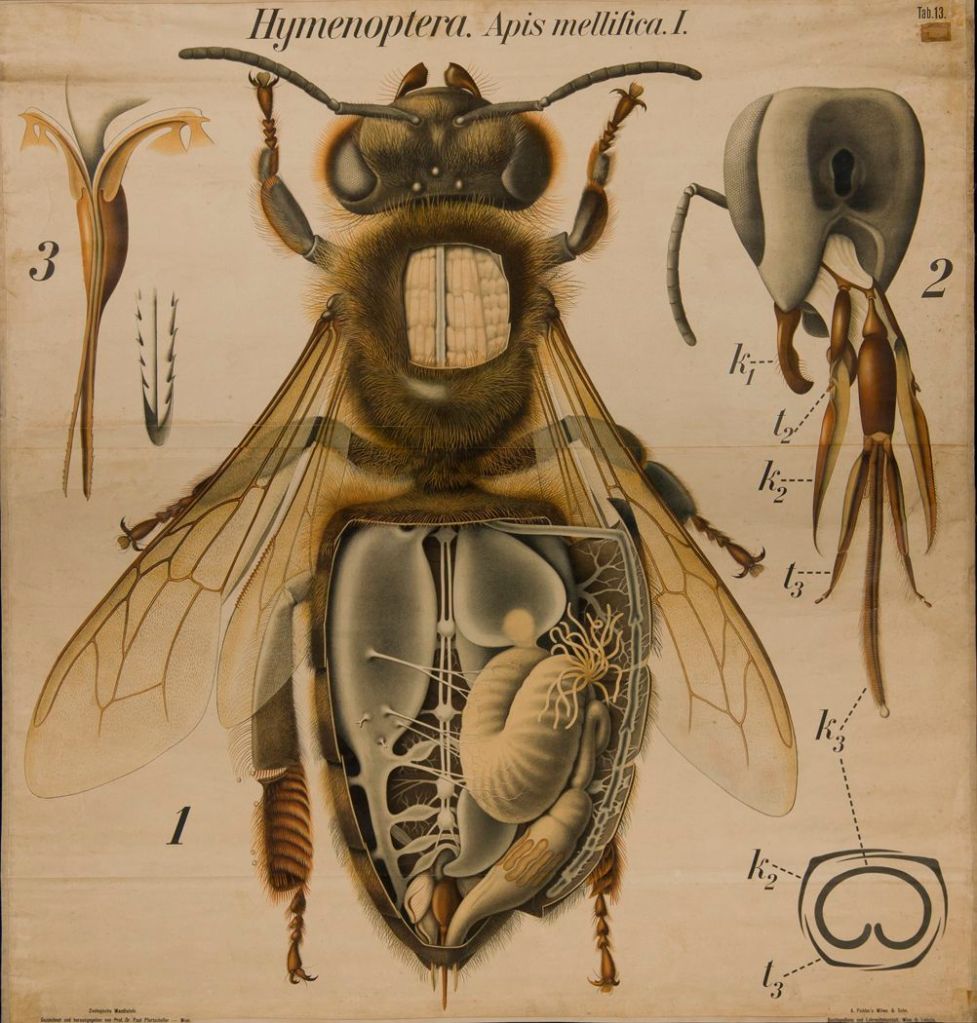
Apis Mellifica, derived from the venom of the honeybee, is a homeopathic remedy renowned for its effectiveness in treating conditions involving swelling, redness, burning, and stinging pains. This remedy is particularly useful for allergic reactions, inflammations, and ovarian issues, offering rapid relief in acute situations. Common uses of Apis Mellifica include: – Allergic Reactions: Treating symptoms like swelling, itching, and redness, especially in cases of insect bites, hives, and food allergies. – Inflammatory Conditions: Reducing inflammation and pain in conditions such as arthritis, bursitis, and urinary tract infections. – Skin Disorders: Soothing skin conditions like eczema, dermatitis, and burns, characterized by itching, burning sensations, and redness. – Ovarian Issues: Managing ovarian cysts and menstrual disorders that cause abdominal pain, bloating, and swelling.
Preparation and Potency
Apis Mellifica is prepared through a process of potentization, involving serial dilution and succussion to harness its therapeutic properties. The remedy is available in various potencies, including 30C, 200C, and 1M, each suited for specific conditions and symptoms. For instance, the 30C potency is often used for acute conditions and mild to moderate symptoms, while higher potencies like 1M are reserved for more severe cases.
Chemical Constituents and Mechanism
The honeybee venom contains several key chemical constituents, including: – Histamine: Contributing to its anti-inflammatory and antiallergic properties. – Melittin: Exhibiting anti-inflammatory and pain-relieving effects. – Phospholipase A2 (PLA2): Playing a role in reducing inflammation and pain.
Dosage and Administration
The dosage of Apis Mellifica varies depending on the condition and individual response. For acute conditions, it’s often recommended to start with low potencies like 12C or 30C, taking 2-3 pellets three times daily. In cases of severe or persistent conditions, it’s essential to consult a healthcare professional for personalized guidance.
Precautions and Interactions
While Apis Mellifica is generally considered safe, individuals with a history of bee sting allergies should exercise caution. Additionally, it’s incompatible with certain remedies like Rhus Tox, and its effects can be antidoted by substances like Cantharis, China, Iodum, and Digitalis.
Welcome back to another in-depth Bible study. Let’s dive into God’s Word together, seeking understanding and insight. May His spirit guide us as we explore Scripture. I have attached two video this time in order to cover all material. The playlist I was using to begin with skipped versus 30-57 or I simply couldn’t find the right video. We will start with chapter 10 tomorrow. Sorry for any confusion or inconvenience.
Judges 9 1 And Abimelech the son of Jerubbaal went to Shechem unto his mother’s brethren, and communed with them, and with all the family of the house of his mother’s father, saying,
2 Speak, I pray you, in the ears of all the men of Shechem, Whether is better for you, either that all the sons of Jerubbaal, which are threescore and ten persons, reign over you, or that one reign over you? remember also that I am your bone and your flesh.
3 And his mother’s brethren spake of him in the ears of all the men of Shechem all these words: and their hearts inclined to follow Abimelech; for they said, He is our brother.
4 And they gave him threescore and ten pieces of silver out of the house of Baalberith, wherewith Abimelech hired vain and light persons, which followed him.
5 And he went unto his father’s house at Ophrah, and slew his brethren the sons of Jerubbaal, being threescore and ten persons, upon one stone: notwithstanding yet Jotham the youngest son of Jerubbaal was left; for he hid himself.
6 And all the men of Shechem gathered together, and all the house of Millo, and went, and made Abimelech king, by the plain of the pillar that was in Shechem.
7 And when they told it to Jotham, he went and stood in the top of mount Gerizim, and lifted up his voice, and cried, and said unto them, Hearken unto me, ye men of Shechem, that God may hearken unto you.
8 The trees went forth on a time to anoint a king over them; and they said unto the olive tree, Reign thou over us.
9 But the olive tree said unto them, Should I leave my fatness, wherewith by me they honour God and man, and go to be promoted over the trees?
10 And the trees said to the fig tree, Come thou, and reign over us.
11 But the fig tree said unto them, Should I forsake my sweetness, and my good fruit, and go to be promoted over the trees?
12 Then said the trees unto the vine, Come thou, and reign over us.
13 And the vine said unto them, Should I leave my wine, which cheereth God and man, and go to be promoted over the trees?
14 Then said all the trees unto the bramble, Come thou, and reign over us.
15 And the bramble said unto the trees, If in truth ye anoint me king over you, then come and put your trust in my shadow: and if not, let fire come out of the bramble, and devour the cedars of Lebanon.
16 Now therefore, if ye have done truly and sincerely, in that ye have made Abimelech king, and if ye have dealt well with Jerubbaal and his house, and have done unto him according to the deserving of his hands;
17 (For my father fought for you, and adventured his life far, and delivered you out of the hand of Midian:
18 And ye are risen up against my father’s house this day, and have slain his sons, threescore and ten persons, upon one stone, and have made Abimelech, the son of his maidservant, king over the men of Shechem, because he is your brother;)
19 If ye then have dealt truly and sincerely with Jerubbaal and with his house this day, then rejoice ye in Abimelech, and let him also rejoice in you:
20 But if not, let fire come out from Abimelech, and devour the men of Shechem, and the house of Millo; and let fire come out from the men of Shechem, and from the house of Millo, and devour Abimelech.
21 And Jotham ran away, and fled, and went to Beer, and dwelt there, for fear of Abimelech his brother.
22 When Abimelech had reigned three years over Israel,
23 Then God sent an evil spirit between Abimelech and the men of Shechem; and the men of Shechem dealt treacherously with Abimelech:
24 That the cruelty done to the threescore and ten sons of Jerubbaal might come, and their blood be laid upon Abimelech their brother, which slew them; and upon the men of Shechem, which aided him in the killing of his brethren.
25 And the men of Shechem set liers in wait for him in the top of the mountains, and they robbed all that came along that way by them: and it was told Abimelech.
26 And Gaal the son of Ebed came with his brethren, and went over to Shechem: and the men of Shechem put their confidence in him.
27 And they went out into the fields, and gathered their vineyards, and trode the grapes, and made merry, and went into the house of their god, and did eat and drink, and cursed Abimelech.
28 And Gaal the son of Ebed said, Who is Abimelech, and who is Shechem, that we should serve him? is not he the son of Jerubbaal? and Zebul his officer? serve the men of Hamor the father of Shechem: for why should we serve him?
29 And would to God this people were under my hand! then would I remove Abimelech. And he said to Abimelech, Increase thine army, and come out.
30 And when Zebul the ruler of the city heard the words of Gaal the son of Ebed, his anger was kindled.
31 And he sent messengers unto Abimelech privily, saying, Behold, Gaal the son of Ebed and his brethren be come to Shechem; and, behold, they fortify the city against thee.
32 Now therefore up by night, thou and the people that is with thee, and lie in wait in the field:
33 And it shall be, that in the morning, as soon as the sun is up, thou shalt rise early, and set upon the city: and, behold, when he and the people that is with him come out against thee, then mayest thou do to them as thou shalt find occasion.
34 And Abimelech rose up, and all the people that were with him, by night, and they laid wait against Shechem in four companies.
35 And Gaal the son of Ebed went out, and stood in the entering of the gate of the city: and Abimelech rose up, and the people that were with him, from lying in wait.
36 And when Gaal saw the people, he said to Zebul, Behold, there come people down from the top of the mountains. And Zebul said unto him, Thou seest the shadow of the mountains as if they were men.
37 And Gaal spake again and said, See there come people down by the middle of the land, and another company come along by the plain of Meonenim.
38 Then said Zebul unto him, Where is now thy mouth, wherewith thou saidst, Who is Abimelech, that we should serve him? is not this the people that thou hast despised? go out, I pray now, and fight with them.
39 And Gaal went out before the men of Shechem, and fought with Abimelech.
40 And Abimelech chased him, and he fled before him, and many were overthrown and wounded, even unto the entering of the gate.
41 And Abimelech dwelt at Arumah: and Zebul thrust out Gaal and his brethren, that they should not dwell in Shechem.
42 And it came to pass on the morrow, that the people went out into the field; and they told Abimelech.
43 And he took the people, and divided them into three companies, and laid wait in the field, and looked, and, behold, the people were come forth out of the city; and he rose up against them, and smote them.
44 And Abimelech, and the company that was with him, rushed forward, and stood in the entering of the gate of the city: and the two other companies ran upon all the people that were in the fields, and slew them.
45 And Abimelech fought against the city all that day; and he took the city, and slew the people that was therein, and beat down the city, and sowed it with salt.
46 And when all the men of the tower of Shechem heard that, they entered into an hold of the house of the god Berith.
47 And it was told Abimelech, that all the men of the tower of Shechem were gathered together.
48 And Abimelech gat him up to mount Zalmon, he and all the people that were with him; and Abimelech took an axe in his hand, and cut down a bough from the trees, and took it, and laid it on his shoulder, and said unto the people that were with him, What ye have seen me do, make haste, and do as I have done.
49 And all the people likewise cut down every man his bough, and followed Abimelech, and put them to the hold, and set the hold on fire upon them; so that all the men of the tower of Shechem died also, about a thousand men and women.
50 Then went Abimelech to Thebez, and encamped against Thebez, and took it.
51 But there was a strong tower within the city, and thither fled all the men and women, and all they of the city, and shut it to them, and gat them up to the top of the tower.
52 And Abimelech came unto the tower, and fought against it, and went hard unto the door of the tower to burn it with fire.
53 And a certain woman cast a piece of a millstone upon Abimelech’s head, and all to brake his skull.
54 Then he called hastily unto the young man his armourbearer, and said unto him, Draw thy sword, and slay me, that men say not of me, A woman slew him. And his young man thrust him through, and he died.
55 And when the men of Israel saw that Abimelech was dead, they departed every man unto his place.
56 Thus God rendered the wickedness of Abimelech, which he did unto his father, in slaying his seventy brethren:
57 And all the evil of the men of Shechem did God render upon their heads: and upon them came the curse of Jotham the son of Jerubbaal.
That concludes our lesson for today. Come back tomorrow as we continue right along in the Bible. Have a great day and God bless!